About Rubber Mixing Mill
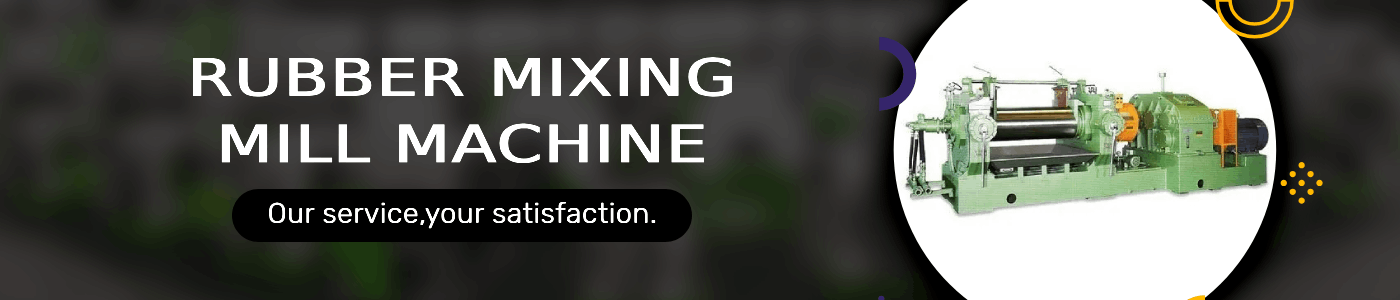
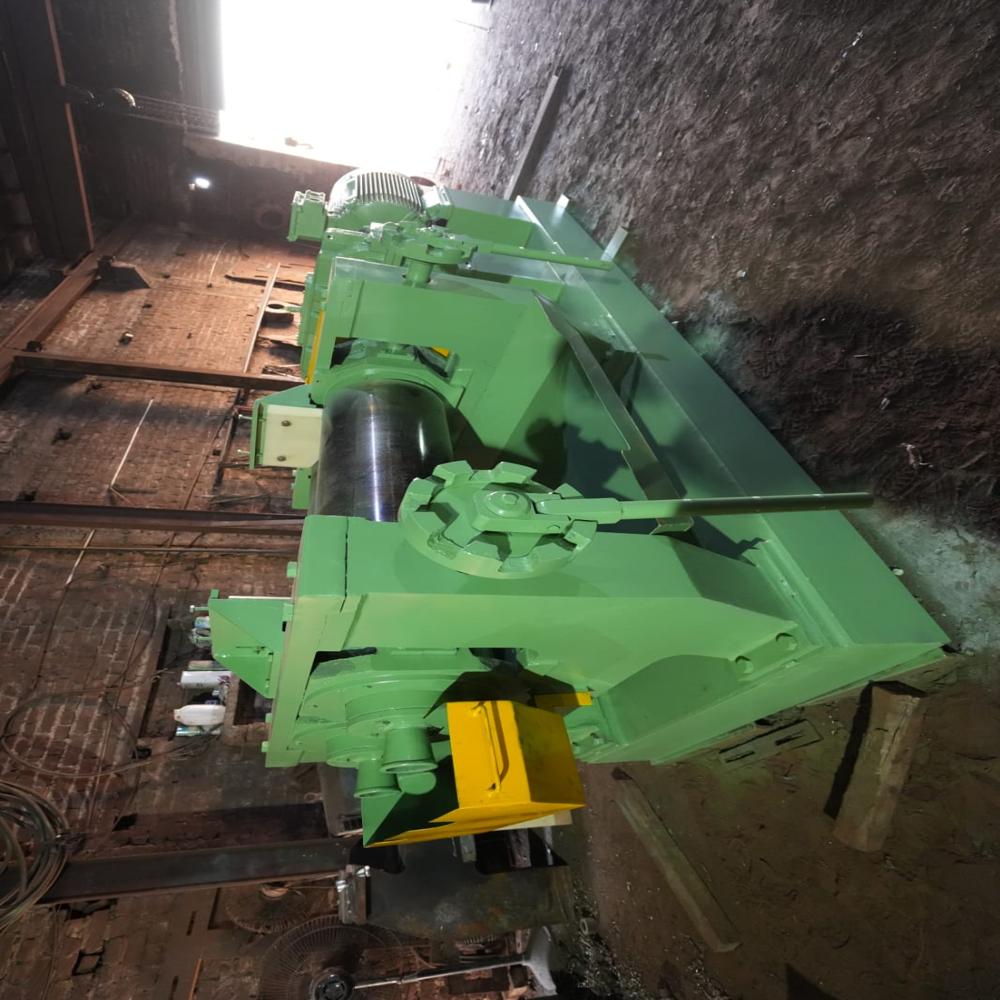
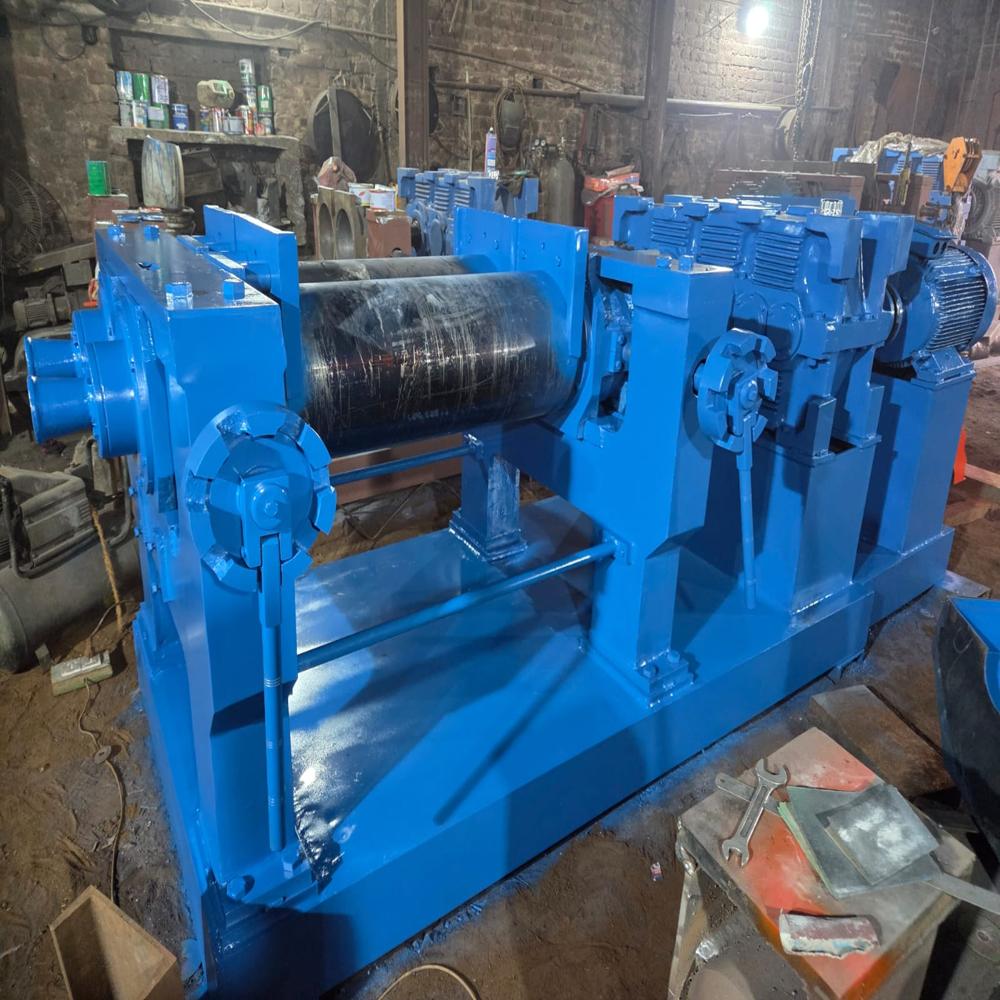
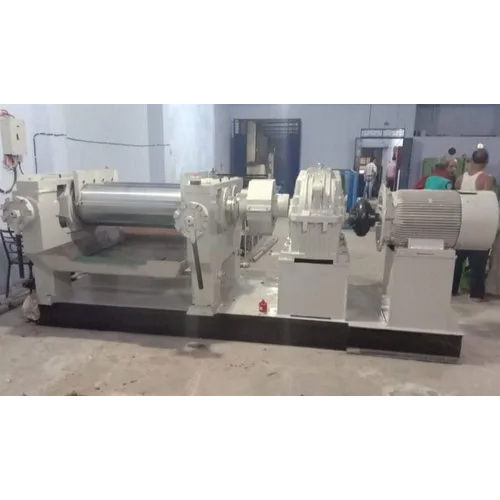
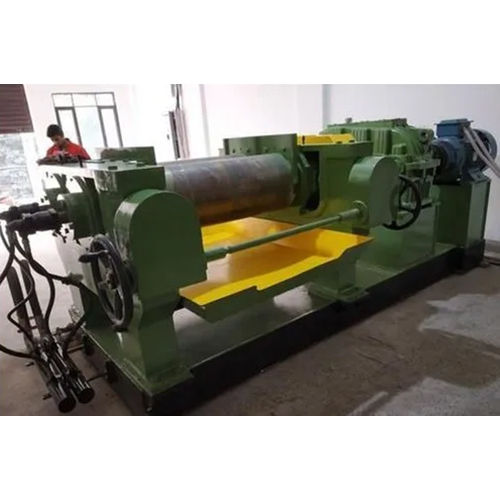
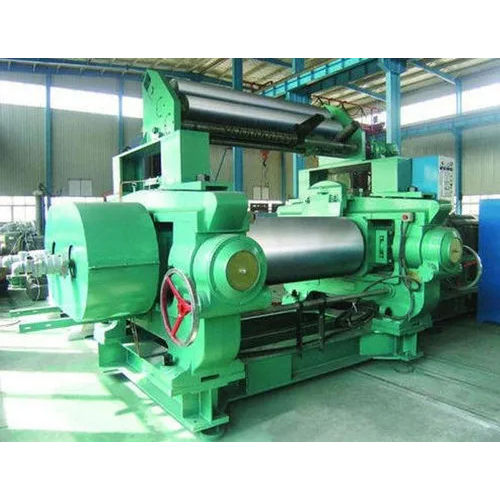
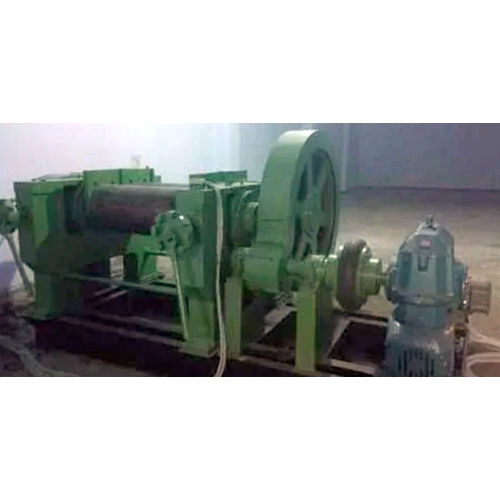
A rubber mixing mill machine (commonly known as a two-roll rubber mill) is a heavy-duty industrial machine used to process and mix raw rubber with additives to produce a uniform rubber compound for further manufacturing.
Machine Description
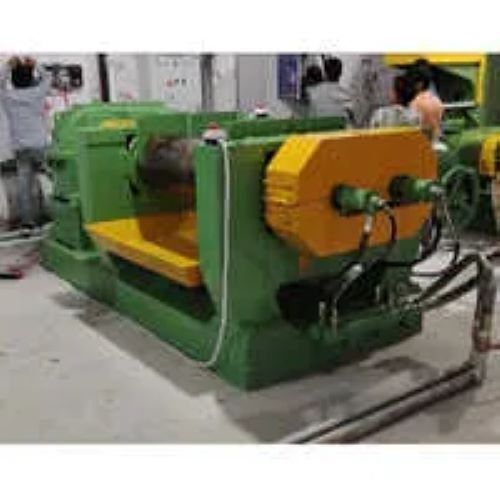
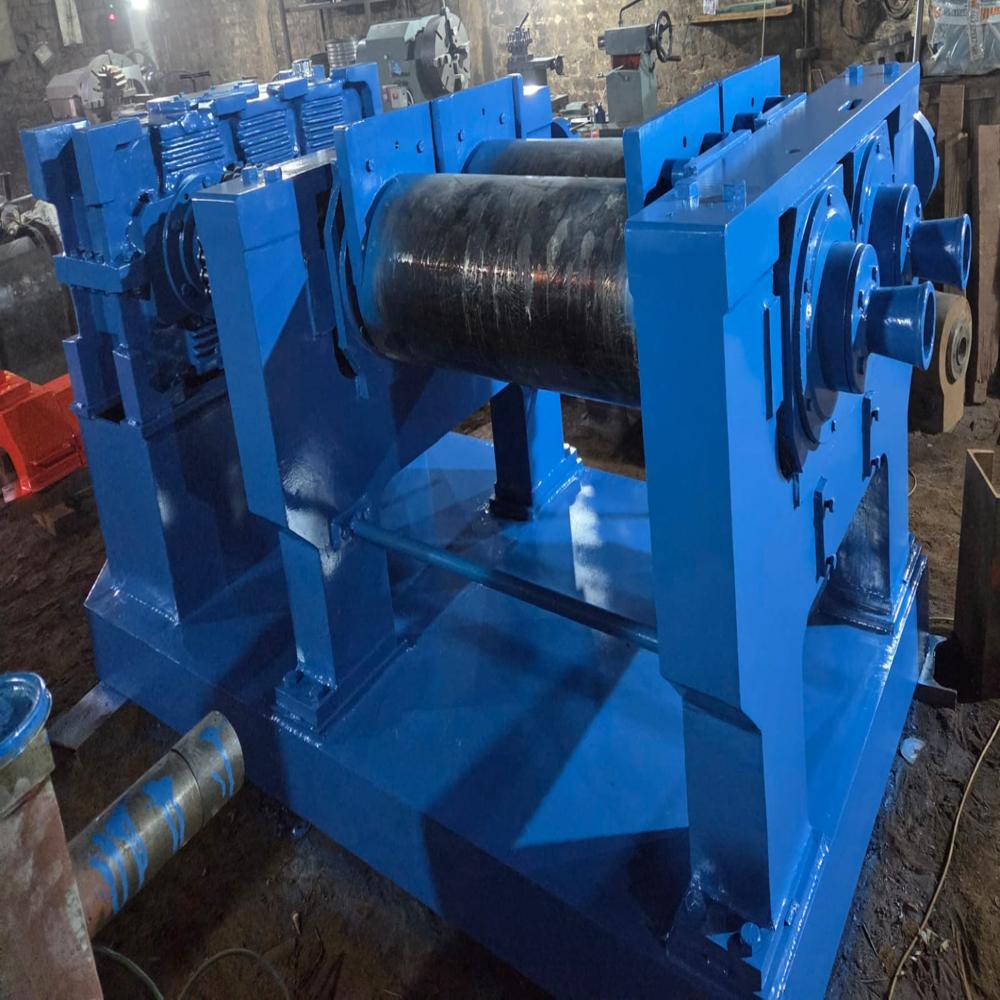
The machine consists of two large parallel steel rolls mounted horizontally and rotating in opposite directions. One roll rotates slightly faster than the other, creating a friction ratio that generates strong shear forces, which are essential for proper mixing.
Rubber material is continuously passed through the gap (called the nip) between the rolls, where it is:
- Compressed
- Sheared
- Stretched
- Folded
This repeated action ensures that all ingredients are evenly distributed.
Key Parts of the Machine
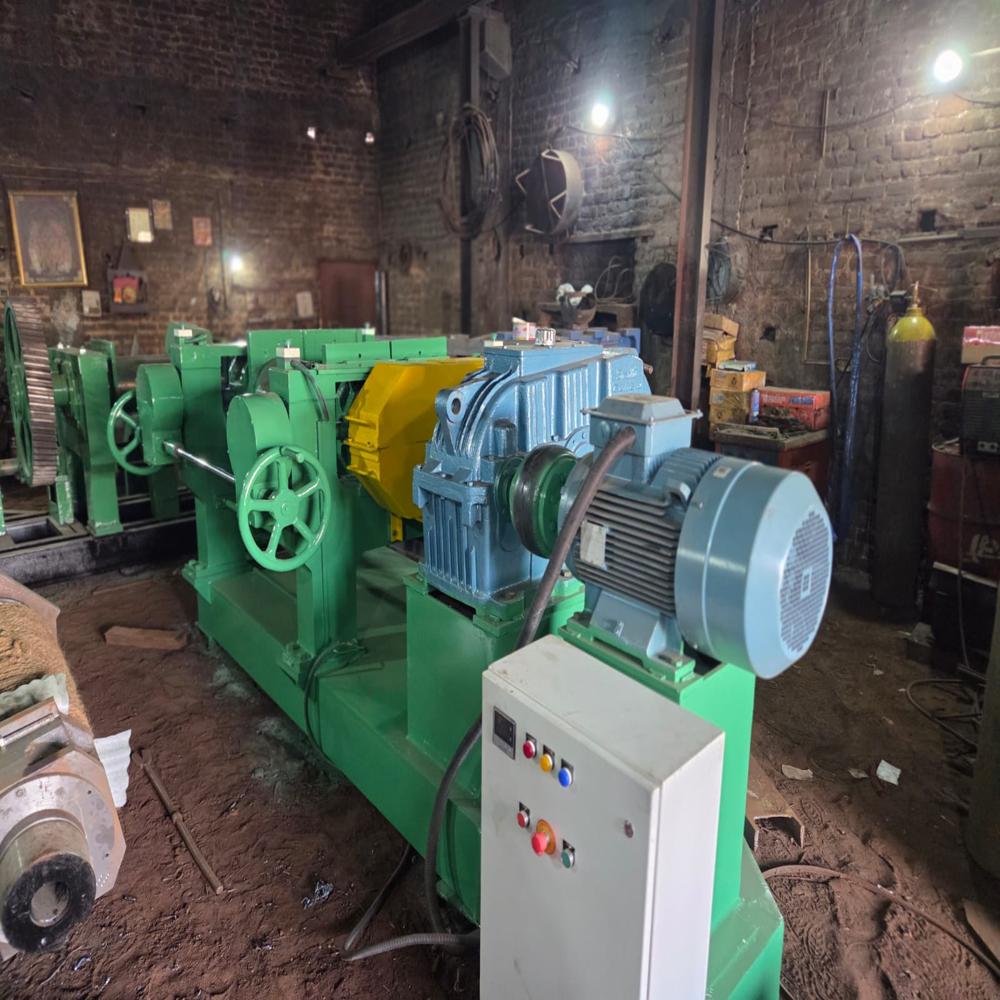
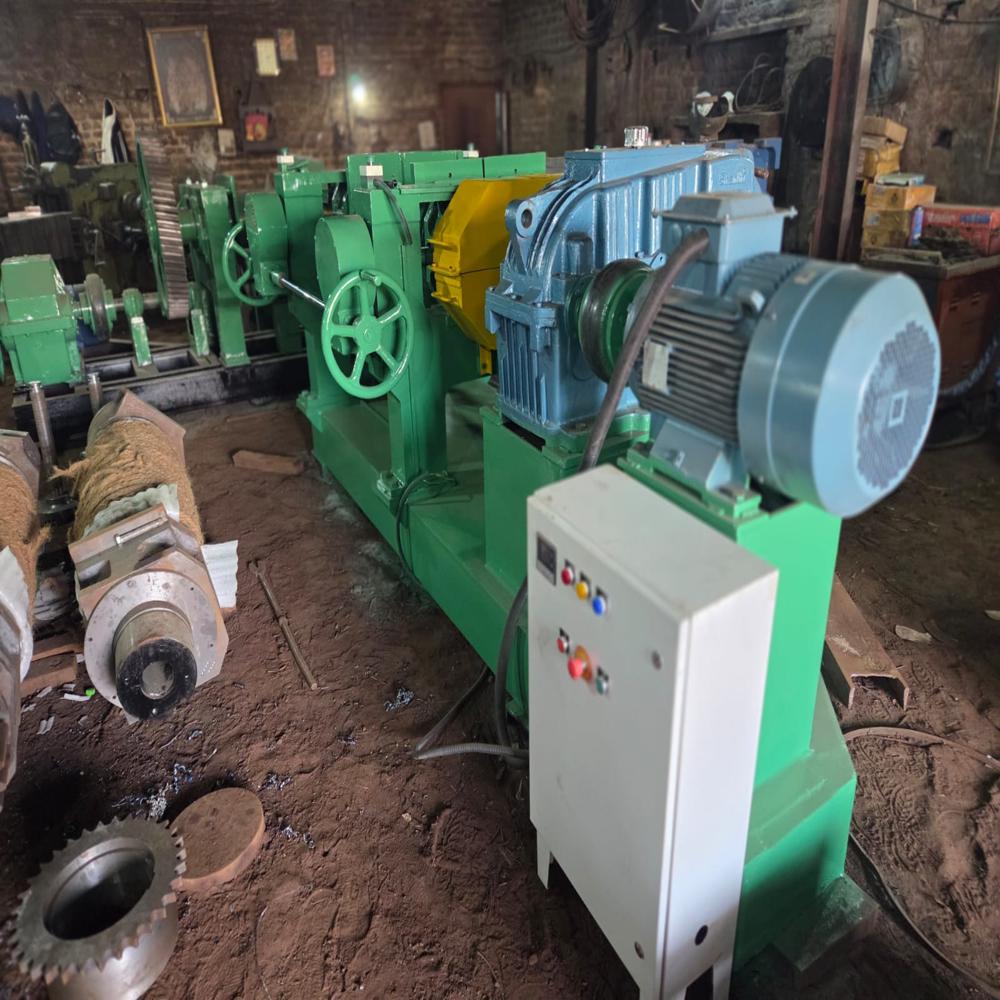
- Rolls (Front & Rear Roll): Made of chilled cast iron or alloy steel, polished for durability
- Mill Frame: Rigid structure supporting all components
- Drive System: Includes electric motor, gearbox, and couplings
- Nip Adjustment System: Screw or hydraulic mechanism to adjust roll gap
- Bearings & Lubrication System: Reduce friction and wear
- Safety Mechanism: Emergency stop bar, trip rod, braking system
- Temperature Control: Water or steam circulation inside rolls to control heat
Working Process
- Raw rubber is fed into the rotating rolls
- Rubber gets trapped in the nip and forms a band on the roll
- Additives (like carbon black, sulfur, oils) are added gradually
- Operator cuts and folds the rubber repeatedly
- Mixing continues until a homogeneous compound is formed
- Final rubber sheet is removed for further processing
Applications
- Tire and tube manufacturing
- Conveyor belts
- Rubber sheets and mats
- Footwear and industrial rubber goods
- Lab-scale testing and formulation development
Typical Specifications (example range)
- Roll diameter: 150 mm to 600 mm
- Roll length: 300 mm to 1500 mm
- Friction ratio: 1:1.1 to 1:1.4
- Motor power: 5 HP to 150 HP (depending on size)
Precision Engineering for Consistent PerformanceOur Rubber Mixing Mill is crafted from high-grade steel and features roller material made of alloy chilled cast iron, delivering durability and reliability. The electric or steam heating system helps maintain consistent temperatures, while the centralized automatic lubrication ensures smooth and long-lasting performance. The machine operates under 85 dB(A), making it suitable for industrial environments where noise levels are a concern.
Flexible Operation and Enhanced SafetyWith manual or hydraulic shifting and adjustment via a hand wheel, this mill caters to diverse production needs. Safety takes center stage, thanks to an emergency stop button and a safety rod, allowing operators to work with confidence. The water-cooling mechanism maintains optimal operating conditions, even during continuous use, enhancing productivity and machine longevity.
FAQ's of Rubber Mixing Mill:
Q: How does the Rubber Mixing Mill improve the mixing process in rubber and plastic manufacturing?
A: The mill employs high-precision alloy chilled cast iron rollers and adjustable gaps to achieve thorough and uniform blending of rubber, plastics, or compounds. The even roller speed and optional heating system ensure the materials are consistently mixed, resulting in better product quality and reduced batch inconsistencies.
Q: What are the key safety features included in this Rubber Mixing Mill?
A: This mill is equipped with an emergency stop, a safety rod, and centralized automatic lubrication, all designed to minimize risks during operation. These features help protect operators and machinery by instantly halting the process or preventing mechanical wear, promoting a safer workspace.
Q: When is it advisable to choose the electric vs. steam heating system for the mixing mill?
A: The electric heating system is recommended for applications requiring precise temperature control and immediate heat generation. Steam heating is ideal for facilities with an existing steam supply, particularly for large-scale operations seeking energy efficiency. Both systems deliver consistent performance depending on your process needs.
Q: Where can this Rubber Mixing Mill be used and by whom?
A: This mixing mill is suitable for rubber and plastic manufacturers, distributors, and suppliers across India, especially in industries focused on compounding, mixing, or processing elastomers and plastics. Its robust construction and semi-automatic design make it a versatile choice in industrial production environments.
Q: What is the benefit of the centralized automatic lubrication system in this machine?
A: The centralized automatic lubrication system ensures all moving components receive optimal lubrication, reducing maintenance intervals and wear. This extends the lifespan of critical parts, decreases downtime, and improves the overall efficiency of production operations.
Q: How is the roller gap adjusted, and why is this important for mixing quality?
A: The roller gap is manually adjusted with a hand wheel, allowing users to fine-tune the space between rollers. Proper gap adjustment is vital for achieving the desired mixing intensity and consistency, which directly impacts the quality of the final compound.




 Send Inquiry


 Send Inquiry
 Send Inquiry
 Send SMS
 Call Me Free